Consumer Electronics & Accessories Sourcing from China
Sourcing phones accessories, audio, charging, smart-home and computing peripherals from verified Chinese factories.
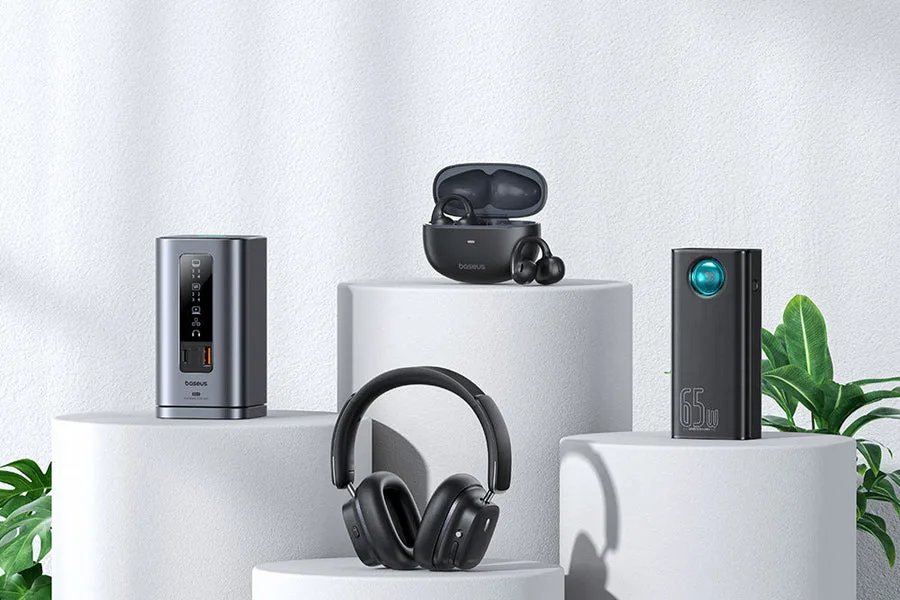
How to source consumer electronics & accessories from China
SZsourcing helps importers, distributors, private-label brands, and Amazon or Shopify sellers source consumer electronics from China’s Pearl River Delta — from TWS earbuds and wearables to smart-home devices, chargers, and small appliances. The core challenge is not finding a factory; it is matching the right supplier type to your product’s maturity, confirming real rated parameters (output, battery capacity, wireless protocol, plug and voltage), and keeping batch consistency and lithium-battery transport compliance under control. SZsourcing supports requirements scoping, supplier screening, quote comparison, sample validation, production follow-up, inspection, and consolidation so you avoid the classic traps of mismatched specs, fake certifications, and held shipments.
- Importers and distributors of electronic accessories
- Amazon and Shopify sellers building a category
- Brands launching a private-label electronics line
Common Products & Specs
| Product group | Typical products | Specs to confirm | Key considerations |
|---|---|---|---|
| Audio devices | TWS earbuds, headphones, Bluetooth speakers, soundbars, mics. | Bluetooth version and codec (SBC/AAC/aptX/LDAC), driver size, rated output, battery and playtime, IPX, mic array. | Most spec-vs-reality sensitive: advertised playtime and “Hi-Res” claims often fail at sample stage. A stock-mold rebrand is fast and low-risk; a tuned acoustic design needs engineering, tooling, and many more samples. |
| Wearables & health monitors | Smartwatches, fitness bands, heart-rate/SpO2 monitors, sleep trackers, kids’ GPS watches. | Sensor type and accuracy, app/SDK, waterproof depth, battery life, display, cellular vs Bluetooth-only. | Hidden cost is software — a custom companion app or cloud dashboard can dominate budget and lead time. Health-adjacent claims face stricter EU/US rules; confirm lawful claims before tooling. |
| Smart home & IoT | Smart plugs, bulbs, cameras, sensors, thermostats, robot vacuums, Matter/Zigbee hubs. | Protocol (Wi-Fi 2.4GHz / Zigbee / Thread / Matter), cloud vs local control, app ecosystem, encryption, radio-module certification. | Compatibility is the dominant risk. A device tied to a proprietary app, or a module lacking your market’s radio certification, is unsellable. Buy a working ecosystem with a certified module and stable app, not just a shell. |
| Power & charging | Wall/GaN chargers, power banks, cables, car chargers, wireless chargers. | Rated input/output (W, V, A), protocol (PD/QC/PPS), cell chemistry and capacity (mAh/Wh), safety protections. | Highest-regulation sub-category: most items contain lithium cells and need UN38.3 plus market marks (CE/FCC/UL where required). A charger that cuts component corners is a fire and recall risk; insist on the real cell supplier and valid test summary. |
| Computer & mobile accessories | Cases, screen protectors, hubs, docks, stands, styluses, adapters, keyboards, mice, webcams. | Device fit and tolerance, material (TPU/PC/leather), connector (USB-C/HDMI), pass-through power/data rates, switch type, polling rate, sensor DPI. | Fit, tolerance, and plug-and-play compatibility matter most: a case blocking a camera, a hub dropping frames, or a keyboard needing an unreachable driver generates high complaint rates. These are low-MOQ, fast-turn commodities where screening is about re-order consistency, not deep engineering. |
| Small appliances | Hair dryers, shavers, massagers, mini fans, kettles, personal-care gadgets. | Motor type and rated power, plug and voltage (100–120V vs 220–240V), heating element, safety cut-offs. | Voltage and plug are make-or-break: a 220V device shipped to the US is a returned-goods disaster. Heating or moving-motor appliances need stricter electrical safety testing than passive accessories. |
| LED lighting & small displays | LED strips, panels, desk lamps, mini and portable monitors. | CRI, color temperature, driver quality, input voltage, dimming protocol, panel resolution/refresh. | Cheap drivers cause flicker, early failure, and color shift between batches. For resale, require a named driver brand and batch-to-batch color consistency; real refresh/response often differs from the listing. |
Manufacturing Regions
| Region / cluster | Specialties | Why it fits | How to verify |
|---|---|---|---|
| Shenzhen (Huaqiangbei & surrounding districts) | Rapid prototyping, small-batch production, components, modules, finished smart devices, export-trade services. | Documented as “China’s No. 1 Electronics Street” — a dense ecosystem where most of a smart device’s core parts can be sourced within an hour and samples turned around in days. Best for new-product development, low-MOQ customization, and multi-component consolidation. | Confirm whether a contact is a market stall/trader or an actual factory. Ask for the manufacturing address (not just a showroom), commission an audit, and check that any certification covers the exact model you will buy. |
| Dongguan | Mass manufacturing, OEM/ODM assembly, injection molding, PCBA, finished consumer electronics. | A core Pearl River Delta city with deep assembly, tooling, and scaled-output capability — well suited to brands moving from prototype to volume, complementing Shenzhen’s R&D/trading layer. | Verify actual production scope: many listings are trading offices. Request license scope, production photos of your line, and a similar-volume reference; commission a third-party audit for mass orders. |
| Huizhou | Lithium battery packs and cells, displays/TV supply chain, PCB, consumer-electronics components. | A major Guangdong electronics and new-energy cluster with a large battery supply chain and display/TV manufacturing — a strong source for battery packs, BMS, and component-level sourcing feeding the Greater Bay Area. | For batteries, confirm UN38.3 Test Summary, cell chemistry, and BMS design. Verify the issuing lab and that the model number matches your pack — never accept a logo-only “certificate”. |
| Wholesale markets & export ports (Guangzhou, Yiwu, Shenzhen/HK ports) | Spot/bulk wholesale (Guangzhou, Yiwu) and container export via Shenzhen (Yantian/Shekou), Guangzhou (Nansha), Hong Kong. | Markets are wholesale/spot channels, not clusters — useful for mixed low-MOQ stock but not custom production. The Pearl River Delta ports handle most electronics exports; supplier location affects inland trucking and consolidation. | Keep the three concepts distinct: a cluster makes the product, a market resells stock, a port is where it ships. Confirm Incoterms and which party books freight; a “port” city does not mean the factory is local. |
Supplier Types
| Supplier type | Best for | Advantages | Limits | Ask for |
|---|---|---|---|---|
| Finished-goods manufacturer | Brands ready for volume of a defined product, especially with their own tooling or a mature stock model. | Direct production control, best unit pricing at scale, accountability for conformance to your spec. | Higher tooling commitment and longer lead times; less flexible on tiny trial orders than traders or market sellers. | License and manufacturing scope, line photos, anonymized references, and a sample built to spec — then verify the address via audit. |
| Component / process factory | Buyers assembling their own product, or needing PCBA, molding, battery packs, or displays. | Deep expertise in one process, strong QC on that component, often better pricing than an assembler who subcontracts it. | Will not deliver a finished, tested, market-ready device; you manage integration, firmware, final assembly. | Process certifications, incoming-material controls, and measured capability data (tolerance, yield); request a small trial batch to confirm consistency. |
| OEM / ODM assembler | Private-label and Amazon/Shopify sellers wanting a branded or lightly customized existing design. | Faster to market than full NPD, lower engineering cost, bundled tooling, assembly, often certification support. | Shared tooling means limited differentiation; “exclusive” molds must be contractually defined or rivals can buy the same item. | The actual BOM and key-component brands (chipset, battery, driver), the ODM’s test reports, and clear IP/tooling ownership terms in writing. |
| Trader / multi-category sourcing company | Buyers consolidating many SKUs, testing the market, or lacking local presence to manage several factories. | One contact, mixed-category sourcing, and consolidated inspection and shipping — valuable for assortment buyers. | Margin stacked on factory price, and they cannot always control underlying production quality or tooling. | Underlying factory names and addresses for your SKUs, the markup model, and who holds responsibility if a batch fails inspection. A trader is not automatically unreliable, but confirm they govern quality. |
| Wholesale / spot seller (market or platform) | Low-MOQ restocking of existing, non-customized items and quick market tests. | Immediate stock, tiny minimums, fast dispatch — ideal for testing demand. | Little to no customization, variable batch consistency, weak control over specs or certifications. | Batch/lot number, the exact spec of stock on hand, and whether the listed certification applies to that specific lot — spot goods are wrong for custom or regulated products. |
Buying Checklist
| Requirement | Why it matters | What to send us |
|---|---|---|
| Intended use & sales market | Drives the safety, radio, and plug/voltage rules you must meet (US 120V/60Hz vs EU 230V/50Hz). | Target countries, sales channel (Amazon/FBA, Shopify, distributor), and user scenario. |
| Required certifications | Wrong or absent marks mean customs holds or marketplace removal; certs are market- and product-specific. | CE/FCC/UL/RoHS/UKCA/BIS/ESMA and the exact product model they must cover. |
| Technical specification sheet | Prevents “close enough” substitutions that change performance and trigger returns. | Rated output/power, battery capacity (mAh/Wh), wireless protocol/version, IP rating, dimensions, connectors. |
| Key component constraints | Chipset, cell, driver, and module choices drive cost, lead time, and compliance. | Approved brands for battery, chipset/SoC, radio module, display driver, and any banned-substitute list. |
| Order quantity & reorder plan | MOQ, tooling amortization, and price breaks depend on volume and cadence, not one number. | First order quantity, target monthly reorder, and seasonality for realistic tiers. |
| Customization & branding | Logo-only, custom packaging, modified hardware, and full NPD sit on different cost/lead-time curves. | Artwork, Pantone, custom mold scope, firmware/app changes, and whether tooling is exclusive. |
| Packaging & labeling | Retail-ready, mailer, or plain carton changes material cost and handling; labels must be market-correct. | Retail box design, barcode/SKU, carton marks, warning labels (lithium marks if applicable), inner packing. |
| Destination & logistics constraints | Lithium content, carton weight, and Incoterms change viable transport mode and documents. | Destination port/airport, preferred Incoterms, and any lithium-battery or size limits from your forwarder. |
Costs, MOQ & Lead Time
We do not publish fixed MOQs, prices or lead times — they depend on your specification, materials and the supplier. The factors below drive the real numbers; we confirm them once we know your requirements.
Raw materials & key components
The battery cell, chipset/SoC, radio module, display, and driver are most of the bill. A cheaper unnamed cell or substituted chip changes both price and performance — an illustrative example: a branded-to-generic cell swap can shift both cost and failure rate, so gaps often reflect component swaps, not margin.
Process complexity & tooling
Injection molds, custom PCBA, acoustic tuning, and calibration add one-time tooling. Stock-mold goods carry almost none; modified hardware and full NPD carry progressively more. Confirm whether tooling is amortized into unit price or charged separately.
Performance tier
Higher output, longer battery life, better CRI, or faster polling usually means costlier components and more testing. Specifying a tier you do not need inflates cost; too low drives returns.
Customization level
Four paths: spot/stock (cheapest, fastest), logo-only (minor setup), custom packaging (new artwork/cartons), and modified hardware or full NPD (tooling, firmware, validation). Each step raises MOQ and lead time — an illustrative example: moving from logo-only to a private mold can multiply both the minimum order and the development window.
Testing, certification & documentation
UN38.3 Test Summary for lithium items, radio/module certification, and safety marks are real costs. A supplier quoting far below peers may be omitting valid testing — the saving is illusory if the shipment is held or recalled.
Packaging & order mix
Retail boxes, foam, and carton sizing affect material cost and per-carton freight. Mixed-SKU consolidation can lower logistics cost but adds handling; tiny cartons waste space while overweight ones incur surcharges. Balance carton size against your forwarder’s weight limits.
Samples & Quality Control
| Check area | Common issue | How to verify |
|---|---|---|
| Documentation & specification | Quoted spec does not match the shipped product (wrong cell, chip, or output). | Compare the supplier’s written spec and BOM against the sample; verify certificate model numbers and issuing lab. A “CE mark” on a box is not proof — confirm scope and validity. |
| Appearance & dimensions | Mold flash, scratches, misaligned seams, or out-of-tolerance dimensions that break fit (e.g., a case blocking a camera). | Use a gauge and fixtures on first Article and periodic samples; photograph critical surfaces under consistent lighting and compare across batches. |
| Function & compatibility | Bluetooth dropout, wrong protocol, app pairing failure, or firmware crash on the target OS/region. | Run the device on the actual destination network and OS; verify protocol, pairing, plug-and-play. For smart devices, confirm the certified radio module and that the app works in your market. |
| Material & performance | Overstated battery capacity/playtime, voltage incompatibility, or a driver that flickers or fails early. | Independently measure rated output, capacity (mAh/Wh), voltage, and runtime; for lighting check CRI and batch color. An illustrative check: discharge a power bank at rated load to confirm real Wh. |
| Packaging & quantity | Wrong SKU, missing lithium marks, crushed retail boxes, or short count per carton. | Verify carton marks, barcode/SKU scan, lithium handling label where applicable, and count per carton against the packing list at pre-shipment inspection. |
| Lab & transport tests (lithium) | Missing or invalid UN38.3 Test Summary, or misclassification of the battery shipment. | Require the UN38.3 Test Summary for any lithium cell/pack, confirm UN3480 (standalone) vs UN3481 (in/packed with equipment), and align IATA/IMDG packing instruction with your forwarder before booking. |
Packaging & Shipping
- Treat most consumer electronics as fragile and, where batteries are present, as regulated dangerous goods — never assume standard parcel handling.
- For lithium products, ensure the UN battery handling mark and correct UN number (UN3480 or UN3481) appear on the outer carton, with the UN38.3 Test Summary and SDS in the shipping documents.
- Air and sea classify lithium differently: standalone cells/packs (UN3480) face the strictest air path (IATA PI 965, often Cargo Aircraft Only), while batteries contained in equipment (UN3481, PI 967) are usually simpler — confirm the exact packing instruction, do not assume.
- Size cartons to your forwarder’s weight limits and container geometry; overweight cartons incur surcharges and light, large ones waste space. Target a per-carton weight your warehouse handles and a size that palletizes cleanly.
- Use anti-static foam or separated compartments to prevent terminal shorting, and add desiccant for humidity-sensitive items on tropical or sea routes.
- Print clear SKU/barcode and carton marks (fragile/this-way-up) so receiving and FBA inbound are unambiguous; mismatched labels cause mis-shipment and chargebacks.
- For multi-supplier orders, plan consolidation at one point before export to cut freight and documentation overhead; confirm who merges and the cut-off dates.
- State transport mode and Incoterms explicitly in the PO; do not let a supplier default to air “for speed” on heavy goods, and do not assume DDP — freight and clearance are a negotiated, documented choice, not accidental.
Common Mistakes
| Mistake | How to avoid it |
|---|---|
| Chasing the lowest quote without checking the component swap. | A price far below peers usually means a generic cell, substituted chip, or skipped testing. Require the named BOM and validate the sample before committing volume. |
| Assuming a “CE/FCC” logo means certified. | Verify the certificate model number, scope, and issuing body. A printed mark is not certification; the model on the cert must match the unit you ship. |
| Ignoring plug, voltage, and wireless-protocol fit for the market. | Confirm 120V vs 230V, plug type, and that the Wi-Fi/radio module is certified for your region. A 220V appliance in the US is a guaranteed return wave. |
| Underestimating lithium-battery transport compliance. | Get the UN38.3 Test Summary and confirm UN3480/UN3481 classification and IATA/IMDG packing instruction before booking. Missing docs mean refused pickup or held cargo. |
| Treating a business license as proof of manufacturing. | A license showing “trading” does not prove a factory. Verify the production address, lines, and a reference build; use a third-party audit for mass orders. |
| Skipping pre-shipment inspection to save cost on the first big order. | A single AQL inspection catches short counts, wrong SKUs, and functional failures before they reach customers. The cost is tiny against a recall or FBA removal. |
| Assuming batch two will match the approved sample. | Lock the approved sample as the golden unit, retain it, and re-check critical parameters (battery capacity, output, color) on every lot — batch drift is common. |
How SZsourcing Supports You
- Requirements scoping: we turn a product idea into a precise spec sheet — use case, market, certifications, rated parameters, and key components — so suppliers quote the same thing.
- Supplier screening: we identify and verify candidate factories and traders, confirm manufacturing scope versus trading status, and flag claim-vs-capability mismatches.
- Quote comparison: we line up offers on the same BOM and spec so price gaps reflect components and process, not hidden substitutions.
- Samples: we coordinate sample builds to your exact spec and check the delivered unit against the agreed spec before you approve tooling.
- Production follow-up: for mass orders we monitor milestones, key-component sourcing, and first-article approval so deviations surface early.
- Inspection: we arrange pre-shipment and functional inspection against your checklist and golden sample, including lithium documentation where applicable.
- Consolidation & shipping: we can consolidate multi-supplier goods and hand off to your nominated forwarder with correct documents and carton marks — no invented freight or clearance guarantees, just coordinated execution.
Consumer Electronics & Accessories — common questions
They solve different problems. A manufacturing cluster such as Shenzhen’s Huaqiangbei ecosystem or Dongguan actually makes the product. A wholesale market (for example in Guangzhou or Yiwu) resells existing stock, good for low-MOQ spot buying but not custom production. A port (Shenzhen/Yantian, Guangzhou/Nansha, Hong Kong) is where goods ship. Knowing which one you are dealing with changes your MOQ, lead time, and risk.
Do not rely on the business license alone — its scope may say “trading.” Instead:
- Ask for the actual production address and photos of the lines making your product.
- Request a reference to similar-volume work (anonymized).
- Commission a third-party factory audit for any mass order.
- For OEM/ODM, ask who owns the tooling and whether the mold is shared with competitors.
At minimum: rated input/output (W, V, A), battery capacity in mAh and Wh, wireless protocol and version, waterproof/IP rating, dimensions and tolerances, and connector types. These are the values that, if substituted, cause returns — so they belong in the PO and on the inspection checklist, not just the listing.
Batteries are Class 9 dangerous goods in transport. You typically need:
- A UN38.3 Test Summary from a recognized lab covering your exact cell/pack model. - An SDS/MSDS for the cell or pack. - Correct UN number: UN3480 for standalone batteries, UN3481 for batteries contained in or packed with equipment. - The right IATA (air) or IMDG (sea) packing instruction, confirmed with your forwarder before booking. Missing or invalid docs lead to refused pickup or held cargo.
It depends on the configuration and your timeline, not a blanket rule. Standalone cells/packs (UN3480) face the strictest air limits and are often restricted to cargo aircraft, while batteries contained in equipment (UN3481) are usually simpler to fly. Sea is common for volume but slower and still requires correct dangerous-goods documentation. Confirm the packing instruction and carrier acceptance for your specific lane rather than assuming.
The four common paths sit on a rising curve: spot/stock (lowest MOQ, fastest) → logo-only (minor setup) → custom packaging (new artwork/cartons) → modified hardware or full NPD (tooling, firmware, validation, highest MOQ and longest lead time). An illustrative example: moving from logo-only to a private mold can multiply both the minimum order and the development window. Tell suppliers which path you are on so quotes are comparable.
A printed CE or FCC mark proves nothing by itself. Verify the certificate’s model number matches the exact unit you will ship, check the scope (some covers only part of the product), and confirm the issuing body is recognized for your market. For radio modules, the module certification, not just the finished device, must be valid for your region.
Spec–reality gaps: overstated battery life, voltage/plug mismatch for the market, wireless incompatibility, and firmware that fails on the target OS. Most are preventable by locking a golden approved sample, writing the real parameters into the PO, and inspecting critical functions and battery capacity on every lot.
No honest agent can guarantee compliance outcomes — and SZsourcing does not claim to. What we do is help you define the correct requirements, screen suppliers, validate samples against spec, confirm the right documentation (including UN38.3 where batteries are involved), and inspect before shipment so the risk of a held or non-compliant order is materially reduced.
FBA has strict labeling and carton rules. Specify scannable barcode/SKU, correct carton marks, the lithium handling label where applicable, and carton weight/size within your forwarder and Amazon limits. Keep the golden sample’s packaging as the reference and re-check it on reorders, since label or carton drift triggers inbound problems.
Sources & References
- HKTDC — China manufacturing / sourcing guidesHKTDC buyer guides document Guangdong electronics clusters (Shenzhen, Dongguan, Huizhou) and Pearl River Delta sourcing patterns; used to support region and cluster claims.https://www.hktdc.com
- Canton Fair — buyer and industry guidesCanton Fair materials and exhibitor data outline China’s consumer-electronics manufacturing regions and export structure referenced for cluster context.https://www.cantonfair.org.cn
- UN Manual of Tests and Criteria, Section 38.3 (UN38.3)The international basis for lithium-battery transport testing (8 tests, Test Summary requirement) and Class 9 dangerous-goods classification cited for battery shipping guidance.
- IATA Dangerous Goods Regulations (lithium batteries, PI 965–967)Defines air transport packing instructions and classification for standalone vs contained-in-equipment lithium batteries referenced in packaging and FAQ sections.
- IMO IMDG Code (sea transport of lithium batteries)Governs maritime dangerous-goods declaration and stowage for lithium shipments, supporting the sea-vs-air distinction in the guide.
- Local government / industry profiles — Huizhou electronics & battery clusterPublic profiles of Huizhou’s electronics and new-energy battery industry (displays, battery packs, components) used to support the Huizhou region row. Verify current figures before publishing exact statistics.
This guide was last reviewed on 7 November 2026.
Source Consumer Electronics & Accessories
Tell us your product, quantity and destination. Attach images or links where you have them.
Can’t find your product? Send us your requirements and we will assess the right approach.