Home & Kitchen Products Sourcing from China
Sourcing cookware, small appliances, storage and household goods with material and safety checks.
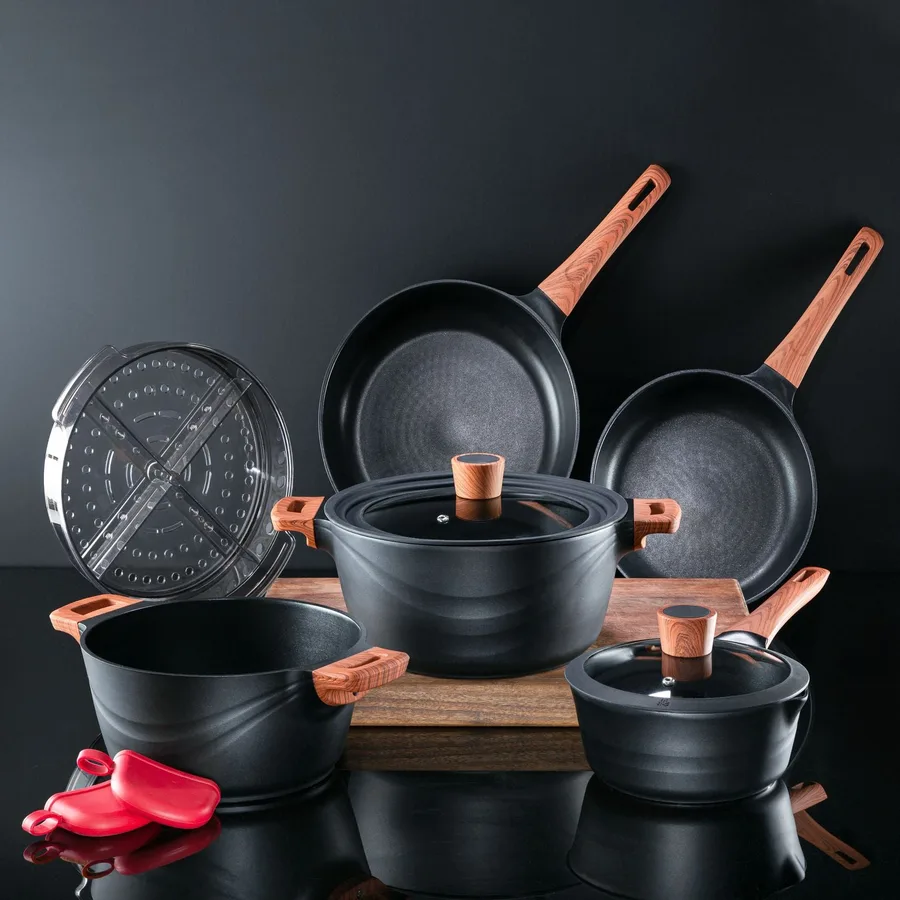
How to source home & kitchen products from China
Home & kitchen is one of China’s deepest sourcing categories, but “kitchenware” hides very different supply chains. A ceramic mug, a 304 stainless pot, a PP food container, and a 1500W air fryer each come from different clusters, materials, and compliance regimes. SZsourcing helps importers, distributors, private-label brands, and retailers pick the right sub-category cluster, specify material grade, food-contact use temperature, surface treatment, and tolerance up front, then verify factories and inspect against real failure modes. We consolidate multi-sub-category orders, manage food-contact certification, and protect fragile and stack-loaded goods through to the export port.
- Importers of home and kitchen goods
- Retail chains and catalog buyers
- Private-label home brands
Common Products & Specs
| Product group | Typical products | Specs to confirm | Key considerations |
|---|---|---|---|
| Ceramic tableware & drinkware | Plates, bowls, mugs, cups, teapots, baking dishes (porcelain, stoneware, bone china, reinforced/“toughened” ceramic). | Material/body type; glaze type (lead-free, cadmium-free); firing temperature (≈1,200–1,400°C for porcelain); wall thickness; dimension and rim tolerance; microwave/dishwasher/oven safety; chip-resistance grade. | Chaozhou (Chao’an) is China’s largest daily-ceramic cluster. Lead/cadmium migration is the key food-contact risk — require lab-tested glaze and don’t equate “ceramic” with “food-safe” until tested. Porcelain stacks and ships better than thin stoneware. |
| Stainless steel cookware & utensils | Stockpots, fry pans, saucepans, steamers, mixing bowls, cutlery, measuring cups. | Grade (304 vs 316 vs 201), thickness (mm), cladding/“multi-ply” base, handle join (riveted/welded), surface finish (mirror/matte/satin), lid fit tolerance, max use temperature. | Xinhui (Jiangmen) and Chao’an are the core stainless clusters. 201 is cheaper but lower corrosion-resistance and not for long food contact — confirm grade by spectrometer, not by paper. Riveted handles leak less than welded on long simmering. |
| Plastic food-contactware | Storage boxes, tumblers, cutting boards, utensils, measuring jugs, organisers. | Resin (PP, Tritan, PS, silicone), food-grade certification, temperature range (e.g. PP ≈ −20°C to 120°C), BPA-free claim, wall thickness, lid seal tolerance, microwave/freezer suitability. | Taizhou (Huangyan molds, Jiaojiang daily plastics) supplies most of China’s plastic housewares. Match resin to use: PP for microwave, Tritan for clarity + heat, not all “plastic” is food-grade. Request resin mill cert, not just supplier self-declaration. |
| Bamboo & woodware | Cutting boards, utensils, serving trays, chopsticks, salad bowls, bamboo fiber items. | Species (moso bamboo, beech, acacia), moisture content (≈8–12%), finish (food-safe oil, lacquer), glue type (formaldehyde class), edge tolerance, crack/warp acceptance, FSC where required. | Anji (Huzhou) leads bamboo; Qingyuan (Lishui) leads bamboo/wood home items (cutting boards ~60%+ of China’s share). Wood moves with humidity — specify moisture content and sealed packaging or you get warping at destination. |
| Kitchen small appliances | Air fryers, rice cookers, blenders, kettles, coffee machines, food processors, electric pressure cookers. | Voltage/frequency (110V 60Hz vs 220–240V 50Hz), plug standard, wattage, motor type, food-contact parts (grade, coating), safety cert (UL/ETL/CE/GS), ERP energy label, cord length. | Foshan Shunde and Zhongshan (Nantou/Huangpu) are the appliance heartlands; Cixi/Ningbo for fans/heaters. Brand OEMs set MOQ ~500–1,000; mid OEMs 200–500. Verify electrical safety and food-contact coating — non-compliance on spot-market goods runs far higher than at formal OEMs. |
| Cookware accessories & sets | Lid sets, silicone seals, replacement gaskets, measuring spoons, trivets, pot holders, gift boxed bundles. | Accessory material (silicone grade, glass lid temper), compatibility tolerance with the main item, set completeness (BOM), spare-part ratio, retail-ready bundling. | Sets fail at the accessory, not the hero item. Define a full bill of materials and a spare-part percentage, and confirm the accessory supplier is qualified to the same food-contact standard as the main product. |
| Glass & enamelware | Drinkware, storage jars, baking dishes, enamel pots and mugs. | Glass type (borosilicate vs soda-lime), thermal-shock range, enamel coating thickness, chip/lead-cadmium limits, rim finish, stacking tolerance. | Highly fragile and temperature-sensitive. Borosilicate tolerates thermal shock far better than soda-lime. Treat as a fragile-packaging line even when the supplier calls it “durable.” |
| Bakeware & gadgets | Baking trays, silicone molds, whisks, peelers, graters, can openers, timers. | Coating (PTFE-free where required), edge safety (no burrs), dimension tolerance for nesting, handle ergonomics, fatigue/cycle rating for moving parts. | Low unit value, high SKU count. Consolidate across a cluster to reach economical MOQs and share tooling; inspect for sharp burrs and coating coverage — the common return drivers. |
Manufacturing Regions
| Region / cluster | Specialties | Why it fits | How to verify |
|---|---|---|---|
| Foshan Shunde (Guangdong) | Kitchen small appliances: rice cookers, air fryers, blenders, kettles, coffee machines, electric pressure cookers. | Mature OEM/ODM base with a complete local chain (sheet metal, heating elements, motors, PCBs, food-grade silicone). Best for mid-to-high private-label and retailer programs. | Confirm export licence, food-contact and electrical certs (CE/UL/ETL as required), and whether they are a brand contract maker or a smaller workshop — the quality gap is large. |
| Zhongshan (Guangdong) | Electric pressure cookers (Nantou/Huangpu), personal-care and small kitchen appliances (Xiaolan). | Dense appliance supply chain with lower tooling cost than Shunde and flexible OEM/ODM; strong for electric pressure cookers and trend SKUs. | Many small appliance workshops lack an export licence and ship via a trading agent — confirm who holds the certs and who files the customs record. |
| Chaozhou / Chao’an (Guangdong) | Daily ceramics (tableware, drinkware, gift porcelain) and stainless hardware (Chao’an). | “China Porcelain Capital” — daily-ceramic output ≈25% of China’s total and ≈30% of exports; complete upstream-to-packaging chain. Also a major stainless cluster. | Request lead/cadmium migration test reports per glaze and pattern; verify the factory’s actual firing and QC process, not just catalog photos. |
| Jiangmen Xinhui (Guangdong) | Stainless steel cookware and kitchenware (the “silver corridor” around Sijiao town). | “China Stainless Steel Products Base” with 500+ hardware-stainless firms and a full raw-material-to-finished-goods chain; large export share. | Specify and verify steel grade (304/316) by on-site spectrometer or lab; check welding/riveting quality and base cladding flatness. |
| Taizhou (Zhejiang) | Plastic daily goods: storage, kitchenware, tumblers, organisers (Huangyan molds, Jiaojiang daily plastics). | “China’s plastic daily-goods capital” — daily plastic products ≈70% of China’s share, with mold-to-finished-goods in one radius and strong food-grade PP supply. | Confirm resin grade and food-contact cert; for custom shapes, evaluate the mold house (Huangyan) separately from the molding/finished-goods factory. |
| Anji (Huzhou) & Qingyuan (Lishui), Zhejiang | Bamboo and bamboo/wood home items: boards, utensils, trays, fiberware (Qingyuan cutting boards ≈60%+ of China’s share). | National bamboo/wood industry demonstration parks with deep processing and export experience; good for natural-material private-label lines. | Specify moisture content and food-safe finish; confirm glue formaldehyde class and, where required, FSC chain-of-custody documentation. |
| Yiwu (Zhejiang) — wholesale market, not a production cluster | A vast spot-goods market aggregating appliances, plastics, and housewares from Shunde, Zhongshan, Taizhou, and Cixi. | Low-MOQ, mixed-SKU, fast-turnaround buying — ideal for testing many SKUs or small grocers/gift traders. | Stalls rarely offer deep customization, often want 100% upfront, and may mix aged stock. Verify production month, power standard, and compliance per batch; treat as a market, not a factory source. |
| Export ports (Shenzhen/Yantian & Shekou, Guangzhou/Nansha, Ningbo-Zhoushan) | Container consolidation and ocean freight for Guangdong and Zhejiang clusters respectively. | Guangdong appliances/ceramics/stainless typically ship via Shenzhen or Nansha; Zhejiang plastics/bamboo via Ningbo. Port choice affects transit and cost. | Confirm Incoterms and which port your supplier normally uses; a far cluster-to-port haul quietly adds cost and lead time. |
Supplier Types
| Supplier type | Best for | Advantages | Limits | Ask for |
|---|---|---|---|---|
| OEM/ODM appliance & cookware factory | Private-label brands and retailers needing certified, branded production at volume. | Full chain, real food-contact and electrical certification, stable quality systems, design support. | Higher MOQ (often 200–1,000+ by sub-category) and longer development lead; not for one-off samples. | Business licence, export licence, cert copies (CE/UL/ETL/LFGB/FDA as relevant), factory audit, and references. |
| Trading company / export agent | Buyers without a China entity, or consolidating many small sub-category orders. | Holds export licence, handles customs, consolidates mixed goods, fluent in compliance paperwork. | Adds a margin layer and is one step from the factory — you must still verify the underlying manufacturer. | Which factories they actually use, how they qualify them, and whether certs are factory-issued or agent-issued. |
| Wholesale market stall (Yiwu, Canton Fair sample rooms) | Low-MOQ spot buying, mixed SKUs, market testing. | Tiny MOQ, immediate stock, no tooling, fast cash turnover. | Little customization, aged/refurbished stock risk, higher non-compliance rate, usually 100% prepayment. | Production date, power/voltage, lot traceability, and independent pre-shipment inspection before paying. |
| Mold & component specialist (e.g., Huangyan molds, Xinhui stamping) | Custom plastic or metal shapes where tooling is the real IP. | Owns the mold and tolerances; can supply multiple finishing factories from one tool. | Sells components, not a finished retail product — you need a downstream assembler. | Mold ownership terms, tolerance sheet, steel/resin spec, and sample cavities before full production. |
| Cross-border / Amazon-dedicated factory | E-commerce sellers needing platform-ready packaging, inserts, and fast reorder. | Experienced with FNSKU, retail-ready packs, and small-batch reorders. | Often resells cluster output rather than manufacturing; verify the true source and certs. | Proof of the actual production site, certification holders, and reorder lead time at your MOQ. |
Buying Checklist
| Requirement | Why it matters | What to send us |
|---|---|---|
| Material grade & cert | Food-contact safety and durability depend on the exact material, not the category name. | e.g. “304 stainless, ASTM/EN grade”; “food-grade PP, mill cert”; “lead/cadmium-free glaze.” |
| Dimensions & tolerance | Controls nesting, stacking, lid fit, and whether items fit your shelf/carton. | Full drawing with ±mm tolerances for diameter, height, wall, and lid seat. |
| Use-temperature range | Microwave, oven, freezer, and stovetop limits differ sharply by material. | Target range (e.g. −20°C to 120°C) and whether stovetop/oven use is allowed. |
| Food-contact compliance target | FDA, LFGB, EU 10/2011, or DGCCRF apply differently by market. | Destination market(s) and required standard; ask for test report per material/glaze/coating. |
| Surface treatment & finish | Glaze, coating, polish, and plating drive look, safety, and cleanability. | Finish spec, coating type (e.g. PTFE-free), and acceptance for chips/scratches. |
| Accessory & set BOM | Sets fail on the missing or incompatible accessory, not the hero item. | Full bill of materials, spare-part ratio, and compatibility tolerances. |
| Packaging & labeling | Fragile and stack-loaded goods need defined pack and retail-ready specs. | Inner/outer pack, drop/stack test level, barcode, care/warning labels per market. |
| Voltage/plug (appliances only) | Wrong standard means dead stock in the destination market. | Target voltage/frequency and plug type; confirm cert (UL/ETL/CE/GS). |
Costs, MOQ & Lead Time
We do not publish fixed MOQs, prices or lead times — they depend on your specification, materials and the supplier. The factors below drive the real numbers; we confirm them once we know your requirements.
Material grade
304 vs 316 stainless, porcelain vs stoneware, food-grade PP vs generic resin, and bamboo species move unit cost substantially. Specifying the minimum acceptable grade (an illustrative example: 316 costs more than 304, which costs more than 201) directly sets price — and safety.
Tooling / mold
Custom shapes need molds (especially plastic and stamped metal). Mold cost is a one-time fixed cost amortized over volume; a shared or existing mold is far cheaper than a new one. Confirm mold ownership in the contract.
Order volume & MOQ
Per-unit price drops with quantity because setup, certification, and logistics spread thinner. Small appliance MOQs commonly run 200–1,000 depending on factory tier; Yiwu spot goods start far lower but with less control.
Surface treatment & decoration
Glazing, enamel, electro-polish, laser engraving, and multi-color decals each add steps. Complex or hand-finished surfaces raise both cost and defect rate.
Food-contact & safety certification
LFGB/FDA/EC1935 lab tests, electrical safety (UL/ETL/CE), and ERP energy labels are recurring costs per material/SKU. They are a real budget line, not a formality.
Automation vs workshop labor
Clusters like Xinhui and Taizhou have digitized lines with shorter, more predictable lead times; small workshops are cheaper per unit but slower and less consistent at scale.
Packaging & freight
Fragile ceramic/glass needs protective and often heavier pack, raising both material and volumetric weight. Carton cube and stack load directly affect ocean-freight cost.
Samples & Quality Control
| Check area | Common issue | How to verify |
|---|---|---|
| Documentation | Missing or mismatched certs, wrong factory on the cert, no lot traceability. | Match test reports (LFGB/FDA/EC1935, UL/ETL/CE) to the actual material, factory, and SKU; confirm report date and scope. |
| Appearance | Glaze pinholes/crazing, welding seams, scratches, decal misalignment, burrs on cut edges. | Visual AQL inspection under standard lighting; define acceptable defect limits (note: a visual check is not certification — keep it separate from lab testing). |
| Function | Lid leaks, handle looseness, appliance leakage/short, moving-part fatigue, poor nesting. | Fit/leak and cycle tests; for appliances, earth/leakage and load-run checks against the rated spec. |
| Material & food contact | Wrong steel grade, non-food PP, lead/cadmium migration, formaldehyde in wood glue. | On-site spectrometer or lab for metal grade; third-party migration and formaldehyde tests per market standard. |
| Dimensions & tolerance | Out-of-tolerance parts that won’t stack, nest, or seal; carton misfit. | Caliper/CMM key dimensions against the tolerance sheet; verify stack and lid-seat fit on samples. |
| Lab / performance | Thermal shock cracking, coating flaking into food, over-temperature failure. | Thermal-shock (glass/ceramic), coating-adhesion, and use-temperature confirmation at or beyond rated limits. |
Packaging & Shipping
- Fragile lines (ceramic, glass, enamel) need dividers, air-column or molded protection, and a confirmed drop-test level — define it in the PO, not after damage.
- Specify stack-load and pallet pattern; heavy stainless nested in a carton can crush lighter goods if cube and weight aren’t balanced.
- Food-contact items need clean, odor-free inner packing (food-grade PE, no recycled-contaminant smell) and sealed bags where moisture matters.
- Bamboo/wood must ship at controlled moisture with desiccant and sealed wrap to avoid warping and mold during transit.
- Retail-ready: color box, barcode/FNSKU, care and warning labels per market, and a defined master-carton count for palletizing.
- For appliances, secure cords, cushion the motor/PCB, and keep cartons upright with orientation markings to protect internals.
Common Mistakes
| Mistake | How to avoid it |
|---|---|
| Treating Yiwu as a factory cluster | Yiwu is a wholesale market reselling cluster output. For volume, branding, or certification, go to the actual cluster (Shunde, Chaozhou, Xinhui, Taizhou) and verify the real manufacturer. |
| Assuming all “stainless” is 304 | 201 is common and cheaper but unsuitable for long food contact. Require grade verification by spectrometer or lab, not a supplier’s word. |
| Skipping food-contact certification for the target market | FDA, LFGB, EC1935, and DGCCRF differ. Get per-material test reports before mass production, or the goods may be refused at import. |
| Not specifying tolerances | Without ±mm tolerances, lids won’t seal and items won’t nest or stack, causing returns. Send a tolerance drawing with every RFQ. |
| Buying appliances on the wrong voltage/plug | Confirm 110V/60Hz vs 220–240V/50Hz and plug type up front; mismatched units are dead stock overseas. |
| Skipping drop/stack tests on fragile goods | Ceramic and glass break in transit, not in the showroom. Define drop-test level and stack load in the PO and verify on pre-shipment samples. |
| Choosing a tiny workshop for food-contact without lab capability | Low price hides missing certification and inconsistent material. Match factory tier to the compliance risk of the product. |
How SZsourcing Supports You
- Sub-category mapping: we route ceramics to Chaozhou, stainless to Xinhui, plastics to Taizhou, bamboo/wood to Anji/Qingyuan, and appliances to Shunde/Zhongshan — not a one-size cluster.
- RFQ packaging: we turn your spec into a precise, comparable RFQ (material grade, tolerance, temperature, food-contact target, BOM, packaging) across several qualified factories.
- Factory verification: business/export licence, cert holders, on-site audits, and spectrometer/lab checks for steel grade and food-contact safety.
- Consolidation: we combine multi-sub-category orders and manage port routing (Shenzhen/Nansha for Guangdong, Ningbo for Zhejiang) to cut freight and lead time.
- Inspection: AQL visual, fit/leak/function, dimension/tolerance, and coordinated third-party lab testing for migration, formaldehyde, and electrical safety.
- Packaging engineering: we define fragile protection, stack load, and retail-ready packs so goods arrive saleable, not damaged.
Home & Kitchen Products — common questions
It spans ceramics, stainless, plastics, bamboo/wood, glass/enamel, small appliances, and accessories — each from a different Chinese cluster.
Ceramics concentrate in Chaozhou; stainless in Xinhui (Jiangmen) and Chao’an; plastics in Taizhou; bamboo/wood in Anji and Qingyuan; appliances in Foshan Shunde and Zhongshan. Yiwu is a market, not a production cluster.
Match by sub-category, not by convenience.
- Ceramic tableware → Chaozhou - Stainless cookware → Xinhui / Chao’an - Plastic foodware → Taizhou - Bamboo/wood → Anji / Qingyuan - Small appliances → Shunde / Zhongshan Going to the right cluster improves price transparency, certification maturity, and inspection access.
Use a factory (OEM/ODM) for branded, certified volume; a trading company/agent if you lack a China entity or need consolidation; Yiwu only for low-MOQ spot testing.
Each adds different control and cost — pick by order size, compliance need, and how much you can verify yourself.
Quotes only compare when the spec is identical. Align material grade, tolerance, use-temperature, food-contact target, surface finish, BOM, packaging, and certs first.
Then compare: a cheaper “304” that is actually 201, or a thinner wall, is not the same product.
At minimum: material grade and cert, full dimensions with ±mm tolerances, use-temperature range, food-contact standard by market, surface treatment, accessory/set BOM, packaging, and (for appliances) voltage/plug and safety cert.
Send this as one sheet so factories quote the same thing.
Treating Yiwu as a factory, assuming all stainless is 304, skipping food-contact certification, omitting tolerances, buying the wrong voltage, and skipping drop/stack tests on fragile goods.
Each can turn a “good price” into refused import, returns, or breakage.
Layer the checks: document/cert match, visual AQL for appearance, function (fit/leak/cycle, electrical safety for appliances), dimensions vs tolerance, and lab tests for material/food-contact.
A visual check is not certification — keep them as separate workstreams.
Define protection and test levels in the PO: dividers/air-column for ceramic and glass, confirmed drop-test level, balanced stack load and pallet pattern, and food-grade odor-free inner packing.
Bamboo/wood needs moisture control and desiccant to avoid warping and mold.
You can’t invent a fixed MOQ — it varies by factory tier and sub-category (small appliances often 200–1,000; Yiwu far lower). Cost is driven by material grade, tooling, volume, finish, certification, automation, and packaging/freight.
Spec the minimum acceptable grade to manage price without sacrificing safety.
We map each sub-category to its real cluster, build a comparable RFQ, verify factories and certs, consolidate multi-sub-category orders, coordinate inspection and third-party lab testing, and engineer fragile/retail-ready packaging through to the right export port.
The result is one accountable partner across a very fragmented category — byline: SZsourcing Sourcing Team.
Sources & References
- 潮州市人民政府门户网站 — 中国瓷都 (Chaozhou ceramics cluster)Official confirmation of Chaozhou as “China Porcelain Capital,” with daily-ceramic output ≈25% of national total and ≈30% of exports, plus a complete upstream-to-packaging chain.https://www.chaozhou.gov.cn/zjcz/csmp/content/post_3369549.html
- 台州市人民政府 — 台州塑料交易会 / 塑料日用品之都 (Taizhou plastics cluster)Government source stating Taizhou daily plastic products ≈70% of China’s share, with Huangyan molds and Jiaojiang daily plastics in one radius.https://www.zjtz.gov.cn/col/col1229049733/art/2026/art_583cdab42f2d4f548910261dae4bb47c.html
- 江门广播电视台 / 南方+ — 新会“银色走廊”不锈钢 (Xinhui stainless cluster)Reports Xinhui’s “China Stainless Steel Products Base,” 500+ hardware-stainless firms and a full raw-material-to-finished-goods chain around Sijiao town.https://static.nfnews.com/content/202605/28/c12476177.html
- 浙江省林业局 — 国家庆元竹木产业示范园区 (Qingyuan bamboo/wood cluster)Confirms Qingyuan’s national bamboo/wood demonstration park, cutting boards ≈60%+ of China’s share, and export to 30+ countries.https://lyj.zj.gov.cn/art/2022/2/21/art_1285514_59026365.html
- 大数跨境 — 广东家电交易会 / 小家电产业带 (Shunde-Zhongshan-Cixi appliances)Industry report describing Shunde and Zhongshan as the global small-appliance heartland and Cixi/Ningbo for fans/heaters, with certification and compliance emphasis.https://www.10100.com/article/150809129
- HKTDC — China Sourcing / Hong Kong Gifts & Houseware fairs (verification reference)Use HKTDC’s sourcing guides and the Canton Fair to cross-check cluster claims, certified exhibitors, and current compliance expectations for houseware buyers.
This guide was last reviewed on 7 November 2026.
Source Home & Kitchen Products
Tell us your product, quantity and destination. Attach images or links where you have them.
Can’t find your product? Send us your requirements and we will assess the right approach.