Smart Wearables & AI Devices Sourcing from China
Sourcing smartwatches, fitness bands, AI gadgets and connected accessories with specification control.
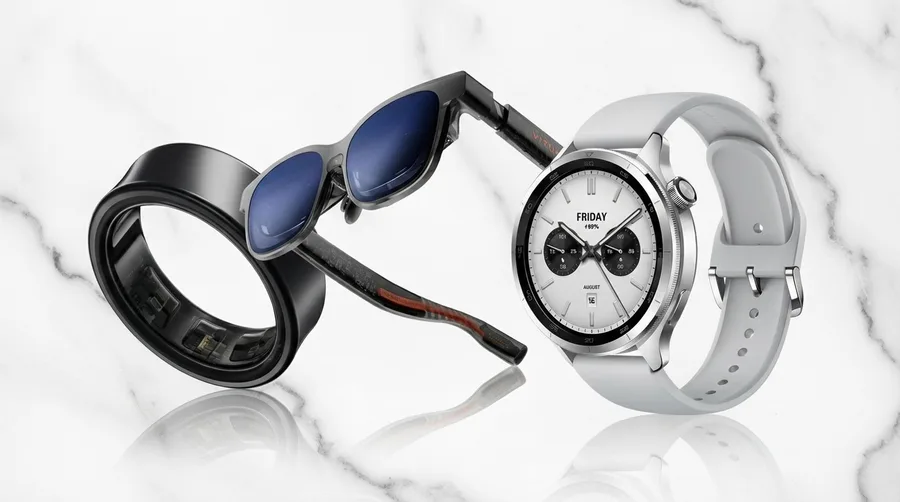
How to source smart wearables & ai devices from China
Smart wearables — fitness bands, smartwatches, GPS safety watches, smart rings, hearables, and wellness trackers — are one of China's most mature and competitive electronics categories, but sourcing them safely is rarely about the cheapest unit price. The real risks are hidden: firmware and app compatibility, language and region locks, subscription and cloud-service dependencies, function claims that don't survive scrutiny, and lithium-battery shipping rules. SZsourcing helps importers, distributors, Amazon and Shopify sellers, and private-label brands select the right supplier type, confirm exact specs, compare quotes on a like-for-like basis, and inspect samples and mass production for the issues that actually cause returns. This guide covers what to source, where in China, and how to buy with confidence.
- Brands developing connected hardware
- Distributors of consumer wearable products
- Innovation teams building AI-enabled devices
Common Products & Specs
| Product group | Typical products | Specs to confirm | Key considerations |
|---|---|---|---|
| Fitness & activity bands | Slim wrist bands and clip-on trackers for step counting, heart-rate, SpO2 and sleep; often the entry private-label SKU. | 0.96–1.47" TFT/AMOLED; optical PPG heart-rate and SpO2; 5–14 day battery on 90–180 mAh Li-Po; 3–5 ATM water resistance; BT 5.0/5.3; companion app for iOS/Android. | Sensor accuracy varies widely by chipset and algorithm; confirm which metrics are measured versus estimated. Cheap bands often overstate SpO2 precision. Decide early whether the app must integrate Google Fit / Apple Health and in which languages. |
| Consumer smartwatches | BT-calling watches, AMOLED sport watches, kids’ and senior safety watches with GPS and SOS. | 1.3–2.1" AMOLED/LCD; BT calling via companion phone; built-in GPS (single or dual band); 200–1000 mAh; eSIM/4G option on some; Android or RTOS firmware. | RTOS watches are cheaper and longer-lived but app-limited; full Android watches cost more and drain battery. Confirm the GPS chip vendor (MediaTek/Qualcomm/Broadcom) — it drives lock speed and accuracy. eSIM needs carrier approval per market. |
| GPS kids / senior safety watches | Location trackers with real-time GPS, geofencing, SOS button, two-way call, and fall detection. | Quad-mode GNSS; LBS + Wi-Fi positioning; 600–900 mAh; IP67; nano-SIM or eSIM; caregiver app with region-specific servers. | Fall detection is algorithmic, not medical-grade. Server location and data-privacy law (GDPR/CCPA) matter for child and senior data. Confirm whether the platform is white-label or shared, and who owns the user accounts. |
| Smart rings | Lightweight sleep and activity rings tracking HR, SpO2, temperature, and sleep stages. | Titanium/ceramic shell; 15–25 mAh; 3–7 day battery; sizing kit required; BT LE; companion app. | Sizing and returns are a real cost driver — include a sizing kit in the offer. Sensor contact and skin tone affect accuracy. Confirm whether health data syncs to Apple Health / Google Fit and under what region restrictions. |
| TWS earbuds & hearables | True-wireless earbuds, open-ear/bone-conduction, and translation or fitness hearables. | BT 5.3/5.4; ANC on mid/high tier; 30–60 mAh per bud; 300–500 mAh case; codecs AAC/SBC; low-latency gaming mode. | ANC quality depends on mic array and DSP tuning, not just spec. Confirm Bluetooth SIG qualification (QID) so the product can legally use the Bluetooth mark. App-dependent features break if the vendor shuts the cloud. |
| Smart & audio glasses | Open-ear audio glasses, notification glasses, and basic camera/translation frames. | BT LE audio; bone-conduction or micro-speakers in temple; 80–200 mAh; IPX4; companion app. | Audio glasses are niche and return-prone; validate demand before volume. Camera models face privacy regulation in the EU/US. Confirm firmware-update path and app longevity. |
| Wellness wearables with ECG / BP estimation | Watches and bands offering ECG, blood-pressure estimation, or continuous wellness monitoring. | Single-lead ECG sensor; cuffless BP estimation algorithm; PPG + impedance; RTOS/Android; caregiver dashboard. | CRITICAL: wellness tracking is NOT a medical diagnosis. Any claim to detect, monitor, or treat a condition (e.g. atrial fibrillation, hypertension) requires regulatory clearance — FDA 510(k)/De Novo in the US, EU MDR Class IIa/IIb, and equivalents elsewhere. Confirm what the supplier’s filings actually cover before you market it. |
| Pet GPS trackers | Collar-mounted GPS trackers with geo-fence, activity, and temperature alerts. | GNSS + LBS; 400–700 mAh; IP67; eSIM/nano-SIM; pet app with shared access. | The subscription model (SIM/data plan) is the real revenue question — confirm who provides connectivity and whether it is region-locked. Battery life in real tracking mode differs greatly from standby claims. |
Manufacturing Regions
| Region / cluster | Specialties | Why it fits | How to verify |
|---|---|---|---|
| Shenzhen (design, firmware & components cluster) | Wearable OEM/ODM, RTOS/Android firmware, companion apps, and Huaqiangbei for components and rapid prototyping. | Deepest talent pool for wearable electronics in the PRD; shortest path from prototype to mass production; strong app and cloud ecosystem. | Huaqiangbei is a components wholesale market, not a factory cluster — buying there suits prototyping and small buys, not mass production. Confirm the supplier’s actual factory address (e.g. Bao’an, Longhua) and business license. |
| Dongguan (high-volume EMS assembly cluster) | SMT/PCBA, final assembly, injection-molded housings, and battery packs for wearables and hearables. | Mature EMS ecosystem scaling from thousands to millions of units; lower assembly cost than central Shenzhen; dense component supply within an hour’s drive. | Many “Shenzhen factories” actually assemble in Dongguan — ask for the production-site address and a live video tour before assuming single-site control. |
| Huizhou (lithium battery & display cluster) | Li-Po/Li-ion cells, battery packs, and some display modules feeding the wearable supply chain. | Co-located battery supply reduces logistics for power-hungry SKUs and supports UN38.3-compliant cell sourcing. | Request the cell’s UN38.3 test summary and manufacturer; spot-check that the pack matches the quoted cell brand. |
| Guangzhou — Canton Fair (sourcing event, not a cluster) | Twice-yearly trade fairs (Phase 1 electronics) to meet verified exhibitors across categories. | Efficient for first contact and comparing multiple suppliers in person; official exhibitor vetting reduces scam risk. | A Canton Fair meeting is a lead, not a factory audit. Always verify the exhibitor’s production site and certifications afterward — the fair itself is a wholesale/trade venue, not manufacturing. |
| Shenzhen ports — Yantian & Shekou (export ports, not manufacturing) | Container and LCL/air forwarding for PRD electronics, including lithium-battery handling. | Closest major gateway for PRD wearables; experienced freight forwarders for Class 9 battery cargo. | Ports are logistics, not sourcing. Confirm your forwarder’s DG (dangerous goods) license for lithium batteries and the latest carrier rules before booking. |
Supplier Types
| Supplier type | Best for | Advantages | Limits | Ask for |
|---|---|---|---|---|
| OEM/ODM manufacturer | Private-label brands wanting their own model, logo, UI, and packaging. | Controls tooling, firmware, and BOM; best for differentiation and volume pricing. | Higher MOQ and upfront tooling/NRE; slower to first shipment than ready stock. | Factory address, business license, existing ODM catalogue, tooling/NRE quote, firmware ownership, and OTA policy. |
| Trading company / wholesale exporter | Ready-made SKUs, low MOQ, fast reorders, and mixed-container buying. | Low commitment, broad catalogue, handles export docs and shipping. | Little control over firmware/app; margins higher; quality varies by sourced factory. | Which factory makes it, certs held, whether app/cloud is shared, reorder lead time, and if they will disclose the OEM. |
| EMS / PCBA contract manufacturer | Buyers with their own design or who need custom electronics and SMT assembly. | Handles PCBA, RF tuning, reliability testing, and scaling; strong on custom hardware. | Usually not a consumer-brand or app house; you supply ID/software or pay for it. | SMT lines, RF calibration capability, water-ingress/reliability test equipment, ISO scope, and component traceability. |
| Firmware & app development studio | Software differentiation: custom app, cloud, OTA updates, and third-party integration. | Closes the gap most hardware factories can’t — real app, server, and update ownership. | Not a manufacturer; pair with a factory for hardware. Ongoing server cost is yours. | Source-code escrow, server-region options, OTA architecture, data-privacy compliance, and post-launch support terms. |
Buying Checklist
| Requirement | Why it matters | What to send us |
|---|---|---|
| Destination markets and required marks (CE/FCC/UKCA/RoHS/REACH/Bluetooth SIG). | Each market has different compliance; certs drive BOM and timeline. | Country list, intended claims, and any retailer mandates (e.g. Amazon). |
| Exact features and sensors (HR, SpO2, GPS, ECG, ANC, eSIM). | Defines chipset, battery, antenna, and firmware — the biggest cost drivers. | Feature matrix with must-have versus nice-to-have and acceptable accuracy. |
| App language(s), regions, and integrations (Apple Health/Google Fit). | Region-locked clouds and missing languages cause launch failures. | Target languages, server-region preference, and integration requirements. |
| Whether features need a paid subscription or vendor cloud. | Some “smart” functions die if the vendor closes the service or locks your region. | List of cloud-dependent features and who owns the accounts and data. |
| Battery type, capacity, and UN38.3 test summary. | Lithium batteries are Class 9 dangerous goods; missing docs block shipping. | Cell spec, pack drawing, UN38.3 summary, and intended shipping mode. |
| Firmware update policy, OTA support, and long-term maintenance. | Unpatched firmware becomes a security and returns liability. | Required update cadence, bug-fix SLA, and source/escrow expectations. |
| MOQ per model, logo/UI/packaging customization, tooling cost. | Sets working capital and per-unit price; tooling may be non-refundable. | Target volume, customization level, and budget for NRE/tooling. |
| NDA, IP ownership, and QA docs (incoming, in-process, final). | Protects your brand and gives a baseline for inspection. | NDA draft, acceptance criteria, and reference sample if available. |
Costs, MOQ & Lead Time
We do not publish fixed MOQs, prices or lead times — they depend on your specification, materials and the supplier. The factors below drive the real numbers; we confirm them once we know your requirements.
Hardware BOM (chipset, display, sensors)
AMOLED versus LCD, GPS tier, and sensor count drive most of the unit cost. An illustrative example: a basic RTOS band and a dual-band-GPS AMOLED watch sit in very different BOM ranges — request the exact BOM breakdown, not a single price.
Battery capacity & UN38.3 compliance
Larger cells and certified, brand-name cells cost more but reduce shipping and safety risk. UN38.3 testing is a fixed cost passed to you; confirm it is included.
Customization depth (ID/MD/UI/app)
Logo-only is cheap; new industrial design, molded housing, custom UI, and a bespoke app add NRE and time. Decide where you truly need differentiation.
Market certifications
CE/FCC testing, Bluetooth SIG QID, and RoHS/REACH documentation are per-market costs. More markets mean more testing budget and lead time.
Software, cloud & OTA
App development, server hosting, and ongoing OTA maintenance are recurring costs often forgotten in a hardware-only quote. Clarify who pays for the server.
Volume, tooling & packaging
Per-unit price drops with volume and shared tooling; retail gift-box packaging and lithium-battery-compliant inner packing add cost. MOQ is negotiable but tied to tooling amortization.
Lithium-battery logistics
Class 9 DG handling, DG fee, and carrier restrictions can add meaningful cost versus ordinary goods — factor it into landed cost, not just EXW price.
Samples & Quality Control
| Check area | Common issue | How to verify |
|---|---|---|
| Documentation & marks | Missing or mismatched CE/FCC, RoHS, UN38.3, Bluetooth QID, or manuals in the wrong language. | Match the certificate holder to the actual manufacturer; verify marks against the notified-body database; confirm UN38.3 summary and multi-language manual. Note: reviewing papers is document verification, not a substitute for independent lab testing. |
| Appearance & build | Screen dead pixels, uneven bezel, scratches, strap gaps, poor water-seal finish. | AQL visual inspection on samples and mass production; check color/logo accuracy against the signed golden sample; verify strap fit and clasp. |
| Function & sensors | HR/SpO2 drift, slow or no GPS lock, BT pairing drops, app sync failure, short battery life, no OTA. | Run a function test plan: sensor readings versus a reference device, GPS cold-start time, BT range, full charge/discharge, app pairing on target OS versions, and a forced OTA update. |
| Material & water resistance | Allergic strap material, claimed ATM rating not met, ingress after immersion. | Confirm strap material (silicone/TPE) and skin-safety; do not trust the printed ATM label — request an actual water-ingress (immersion/pressure) test report or commission one. |
| Lab & safety (independent) | Battery overheating/swelling, RF out of band, excessive SAR, drop failure. | For volume or sensitive markets, commission third-party lab tests: battery safety (IEC 62133 / UN38.3), RF (FCC/CE), and drop/ingress. Treat supplier self-tests as indicative only. |
Packaging & Shipping
- Lithium batteries inside wearables make the finished goods Class 9 dangerous goods (typically UN3481, “lithium batteries contained in equipment”) — packing must follow the carrier’s DG rules and include the lithium-battery mark.
- Require the supplier’s UN38.3 test summary and a Declaration of Conformity before booking; some air carriers and postal services restrict or ban loose/large battery shipments.
- Sensors and displays are fragile: use anti-static, shock-absorbing inner trays and desiccant; avoid direct pressure on the screen and the heart-rate window.
- Confirm retail versus bulk packing: gift-box retail needs sturdier cartons and may raise per-unit freight; plain bulk packs lower cost but need your local repack.
- Label the outer carton with the correct HS code, battery type/capacity, and “contains lithium battery” so customs and forwarders handle it correctly.
- Keep firmware version, serial range, and app QR on the pack consistent with the shipped units to avoid support chaos.
Common Mistakes
| Mistake | How to avoid it |
|---|---|
| Treating wellness tracking as a medical device. | Do not market detection or diagnosis of conditions without regulatory clearance (FDA/EU MDR). Keep claims to wellness and fitness tracking, and confirm what the supplier’s filings actually cover. |
| Ignoring app and cloud region locks. | Verify the companion app works in your target countries, supports the needed languages, and that features don’t depend on a vendor cloud that may be region-locked or shut down. |
| Trusting the printed waterproof rating. | An “ATM” or “IP” label on the spec sheet is not proof. Commission an actual ingress test and align the marketed rating with the tested result. |
| Overlooking lithium-battery shipping rules. | Get the UN38.3 summary and DG-compliant packing upfront; otherwise shipments are delayed, fined, or refused by carriers. |
| Assuming a “factory” is the real manufacturer. | Verify the production address and business license; many traders resell the same ODM. A Canton Fair or Huaqiangbei contact is a lead, not proof of manufacturing. |
| Skipping firmware-update and after-sales planning. | Confirm OTA support, update cadence, and who maintains the server post-purchase; unpatched devices become returns and security risks. |
| Underestimating localization and integration. | Confirm app language, Apple Health/Google Fit support, and manual languages for each market before committing — these are common launch blockers, not nice-to-haves. |
How SZsourcing Supports You
- Supplier shortlisting and verification — we confirm factory addresses, business licenses, and whether you are dealing with a manufacturer or a trader.
- RFQ preparation and like-for-like quote comparison across Shenzhen, Dongguan, and the PRD so you compare specs, not just prices.
- Sample coordination and function-check plans for sensors, GPS, battery, app sync, and OTA before you approve mass production.
- Factory audits and production monitoring focused on wearable-specific risks (battery docs, water-ingress, firmware).
- Certification guidance (CE/FCC/RoHS/REACH/Bluetooth SIG) and help reading test reports — we do not issue certs ourselves.
- Lithium-battery logistics coordination with DG-aware forwarders and correct packing/marking.
- App, firmware, and cloud-compatibility review, including region locks, languages, and data-privacy exposure.
- Consolidation and pre-shipment QC so mixed wearable SKUs arrive inspection-ready.
Smart Wearables & AI Devices — common questions
ODM means the factory already has a designed model you rebrand (faster, lower MOQ, less unique). OEM means building closer to your own spec, often with custom ID/MD, firmware, and app (more control, higher NRE and MOQ).
For most first-time private-label sellers, a tuned ODM with logo/UI/packaging changes is the pragmatic start; move to deeper OEM once volume justifies the tooling.
Consumer wearables track wellness metrics — heart rate, SpO2, activity, sleep — they do not diagnose. Any claim to detect, monitor, or treat a medical condition (e.g. atrial fibrillation, hypertension) requires regulatory clearance: FDA 510(k)/De Novo in the US, EU MDR Class IIa/IIb in Europe, and equivalents elsewhere.
Before marketing such claims, confirm what the supplier’s actual regulatory filings cover. SZsourcing will not advise presenting wellness tracking as medical diagnosis.
Many “smart” features rely on the vendor’s cloud or app. If that service is region-locked, shut down, or requires a paid subscription you don’t control, the feature dies for your customers.
- Ask who owns the accounts and data.
- Confirm the app supports your markets and languages.
- Prefer OTA-capable firmware you can maintain, or a studio that escrows the source.
Commonly: CE (RED for radio/BT/Wi-Fi, plus RoHS/REACH), FCC for the US, UKCA for the UK, and a Bluetooth SIG QID to use the Bluetooth mark. Lithium batteries need UN38.3.
Exact scope depends on features (GPS, cellular, ECG). Treat supplier self-declarations as indicative and verify against the notified-body database.
Yes. Wearables containing Li-Po cells are generally Class 9 dangerous goods (UN3481). You need a UN38.3 test summary, DG-compliant packing, and a forwarder with DG authorization.
Some air carriers and postal services restrict battery shipments, so factor DG fees and possible mode changes into landed cost and lead time.
It varies by model and customization. Ready ODM stock can start at low hundreds of units; custom ID/MD or tooled housings typically require higher commitments to amortize NRE.
We do not publish fixed MOQ numbers because they shift with the chipset, battery, and certification scope — request a quote against your exact spec instead.
Optical PPG accuracy depends on the sensor, skin contact, algorithm, and skin tone; budget units often estimate rather than measure precisely, especially for SpO2.
Define an acceptable accuracy band in your RFQ and verify it during sample testing against a reference device — don’t accept the spec-sheet number at face value.
Ask for the production-site address and business license, then cross-check and, where possible, take a live video tour or audit. Note that many “Shenzhen factories” actually assemble in Dongguan, and Huaqiangbei or Canton Fair contacts are sourcing leads, not proof of manufacturing.
SZsourcing verifies addresses and licenses before introducing a supplier.
Many do, but integration is per-model and per-region, and some vendors lock it behind their own app or a subscription.
Confirm the exact integration in writing for your target markets, and test it on the sample with the OS versions your customers use.
Clarify OTA support, update frequency, and who runs the server before you order — unpatched firmware becomes a security and returns risk, and a dead cloud kills connected features.
Build the maintenance obligation into the contract (SLA, source escrow, bug-fix commitment) so after-sales doesn’t depend on the supplier’s goodwill.
Sources & References
- HKTDC — Hong Kong Electronics & Wearables SourcingTrade data and supplier landscape for PRD electronics and wearable categories.https://www.hktdc.com
- Canton Fair (China Import and Export Fair)Official biannual trade fair (Phase 1 electronics) for first-contact supplier vetting.https://www.cantonfair.org.cn
- SourcingYuan — China Electronics Manufacturing ClustersMaps Shenzhen/Dongguan/Huizhou specializations and component sourcing by cluster.https://www.sourcingyuan.com
- Viotech — Dongguan Smart Mobile Terminal ClusterOverview of Dongguan’s EMS/wearable assembly ecosystem and supply-chain density.https://www.linkedin.com/pulse/dongguans-smart-mobile-terminal-cluster-tianjin-viotech-co-ltd-e3ztc
- Bluetooth SIG — Qualification & QIDRequired qualification to use the Bluetooth mark and ship BT wearables legally.https://www.bluetooth.com
- UN/UNECE — Lithium Battery Transport (UN38.3)Standard defining air/sea transport testing for lithium cells and packs.https://unece.org/transport/dangerous-goods
This guide was last reviewed on 7 November 2026.
Source Smart Wearables & AI Devices
Tell us your product, quantity and destination. Attach images or links where you have them.
Can’t find your product? Send us your requirements and we will assess the right approach.